
Sourcing Smart: How Consolidated FMCG Distribution is Powering Dubai’s Quick-Commerce Boom
In the fast-paced retail landscape of Dubai, speed is no longer just a luxury—it is the baseline. The quick-commerce (q-commerce) revolution has taken the city by storm. Whether it is a quick office grocery order in Downtown Dubai or a late-night household pantry emergency in Dubai Marina, consumers expect their deliveries in 15 minutes or less.
But behind the seamless user interfaces of delivery giants lies a complex, high-pressure supply chain. For q-commerce operators and modern retailers, the ultimate challenge is maintaining zero-downtime inventory. A single out-of-stock notification on a popular beverage or coffee brand can drive a customer to a competitor.
As a logistics partner based in the heart of Dubai, Infinity Bay Trading has observed a massive shift: successful retail and q-commerce teams are moving away from fragmented sourcing and embracing consolidated FMCG distribution. Here is why consolidation is the smartest play for your bottom line in 2026.
The Cost of Fragmented Sourcing
Historically, retailers in Deira or Al Barsha sourced different brands from separate niche agents. One supplier brought in the tea, another handled snacks, while a third managed baby nutrition and personal care. While this worked in the era of weekly restocking cycles, it is completely unviable for real-time inventory management.
Fragmented sourcing introduces several hidden operational friction points:
- Multiple POs and Administrative Friction: Your procurement team spends hours reconciling invoices, coordinate deliveries, and chasing payments.
- Logistics Bottlenecks: Five different delivery vans arriving at your micro-fulfillment center (dark store) daily leads to congestion and labor inefficiency.
- High Minimum Order Quantities (MOQs): Meeting separate MOQs for multiple suppliers forces you to tie up capital in excess inventory.
Consolidating your supply chain under a single partner solves these pain points. By utilizing our FMCG Division, you can order top global brands—from Nestlé, Nescafé, and Lavazza, to Red Bull, Pepsi, and Coca-Cola—on a single purchase order.
Driving Operational Efficiency in Dark Stores
Q-commerce relies on localized micro-fulfillment centers (MFCs). These spaces have very high rent-per-square-foot ratios and limited storage space. You cannot afford to stock 30 days of inventory. You need high-frequency, smaller deliveries.
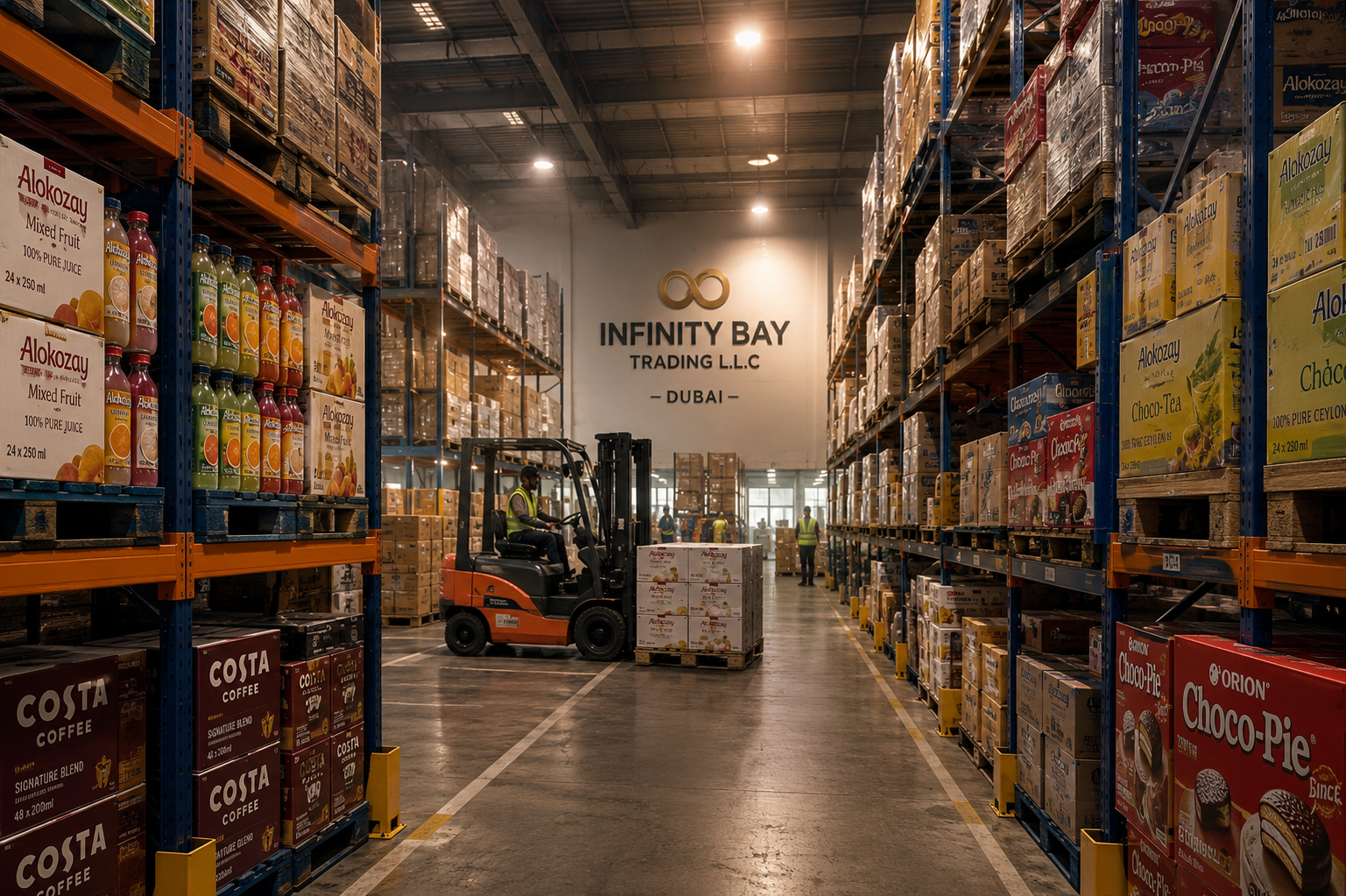
A consolidated distributor can pack mixed pallets of groceries, confectionery, pantry staples, and personal care items, delivering them in a single shipment. This not only cleans up your receiving dock but also ensures your shelves are replenished on a daily, demand-driven schedule.
Moreover, dealing with a partner located right in Dubai means shorter transit routes and immediate response times. Whether you need a truck of drinks or a pallet of premium chocolates, our logistics team coordinates local dispatch with full regulatory compliance under Dubai Municipality guidelines.
Sourcing the Right FMCG Mix for Dubai's Diverse Demographics
Dubai is a melting pot of cultures, and this diversity is reflected in its consumer goods preferences. A successful dark store in Dubai Marina will require a significantly different product assortment than one located in Al Karama or Deira. Sourcing managers must understand these micro-market dynamics to optimize their shelf space.
- Western Expatriate Hubs (JBR, Palm Jumeirah, Downtown): High demand for organic food options, premium coffee pods (like Nescafé Dolce Gusto or Lavazza), sugar-free energy drinks, and specialty personal care items.
- South Asian and Arab Family Neighborhoods (Al Barsha, Mirdif): Greater demand for bulk milk powders (like Nestlé Nido), family-pack tea leaves, regional spices, and traditional baby nutrition brands.
- Commercial Districts (Business Bay, DIFC): High demand for quick-grab items, canned beverages, single-serve chocolates, and premium snacking items.
By partnering with a consolidated distributor like Infinity Bay Trading, procurement teams can adjust their weekly orders to match these shifting demographics. Instead of placing five large orders to meet high MOQs across different distributors, a single mixed order can be dispatched daily, keeping cash flow fluid and dark stores agile.
The Cold Chain Challenge: Preserving Product Quality in Dubai’s Climate
One of the most critical aspects of FMCG distribution in the Gulf region is climate control. In Dubai, where summer temperatures regularly exceed 45 degrees Celsius, maintaining a flawless cold chain is not just an operational goal—it is a regulatory requirement.
For products like chocolates (Galaxy, Toblerone, Kinder), carbonated beverages, and baby milk powders, any temperature fluctuation can ruin the texture, alter the flavor, and significantly reduce shelf life.
At Infinity Bay Trading, we operate temperature-controlled warehouse facilities and utilize refrigerated transport options to guarantee that the products arrive at your fulfillment centers in pristine condition. Our logistics engineers monitor the temperature logs from dispatch to delivery, ensuring full compliance with the highest food safety standards.
---
Detailed Cost Breakdown of Sourcing Models
To understand the actual financial impact of consolidating your FMCG supply chain, let us compare the total procurement cost of a fragmented sourcing model versus a consolidated sourcing model:
| Cost Element | Fragmented Sourcing Model (5 Suppliers) | Consolidated Sourcing Model (Infinity Bay) | | :--- | :--- | :--- | | Purchase Orders (POs) | 5 separate POs generated, approved, and tracked | 1 single PO for all brands | | Admin Processing Cost | AED 750 (approx. AED 150 per invoice) | AED 150 (single invoice) | | Delivery Logistics | 5 separate delivery trucks (multiple dock bookings) | 1 single mixed-pallet delivery | | Inventory Carrying Cost | High (due to separate MOQs for each vendor) | Optimized (low MOQs across a broad brand mix) | | Stockout Risk | High (delays with one vendor impact key lines) | Low (coordinated delivery of replacement stocks) |
As shown in the table, the administrative and logistics savings alone can improve retail margins by up to 8-12%, which is a significant competitive advantage in the high-volume, low-margin FMCG sector.
Managing the Q-Commerce Supply Chain: Vendor Managed Inventory (VMI)
As we look toward the future of retail, the integration of technology in the supply chain is critical. Leading q-commerce platforms in Dubai are implementing Vendor Managed Inventory (VMI) systems with their key supply partners.
Through VMI, the retailer shares real-time inventory level data with the distributor. The distributor then automatically triggers replenishment dispatches when stocks fall below a predefined threshold. This eliminates the delay between inventory depletion and manual purchase order generation, ensuring popular items are never out of stock.
Infinity Bay Trading is equipped to partner with modern retailers on VMI integration. By utilizing local stock reserves at our Deira distribution hub, we can dispatch urgent replenishment within hours to dark stores in need, keeping your 15-minute delivery promise alive.
---
Steps to Consolidate Your FMCG Supply Chain
If you are looking to optimize your procurement operations, we recommend a phased transition to vendor consolidation:
1. Audit Your Current Supplier List: Identify all the micro-vendors supplying snacks, baby products, personal care, and beverages. Calculate the administrative cost of processing their invoices. 2. Review Category Coverage: Cross-reference your product lists with the catalog of a broad-spectrum distributor. You will find that a significant portion of your inventory can be consolidated under one supplier. 3. Establish a Transition Timeline: Transition one product category at a time to prevent any disruption in supply. Start with high-volume, stable items like beverages and pantry staples. 4. Optimize Delivery Schedules: Work with your consolidated partner to establish a delivery cadence (e.g., three times a week) that minimizes receiving dock congestion.
Sourcing Smart: Looking Ahead
To thrive in Dubai's retail environment, procurement managers must look at total cost of ownership (TCO) rather than just the unit price. Minimizing invoice processing costs, reducing freight overheads, and eliminating stockouts are what drive profitability.
Are you ready to optimize your FMCG supply chain? Read our guide on how vendor consolidation cuts hidden costs or explore our complete FMCG catalog range today.
Consolidation is the path to agility. Make your procurement frictionless today.
To discuss custom volume pricing or schedule a delivery cycle, get in touch with our team at our Deira office.